Becoming a Machine Learning Engineer: A Step by Step Guide
Machine learning (ML) might sound like something out of a sci-fi movie, but in reality, it’s one of the most impactful and in-demand fields in technology today. From recommending your next binge-worthy show on Netflix to enabling self-driving cars, machine learning is shaping the future. If you’ve ever wondered how to start your journey in this exciting field, you’re in the right place. Let’s break it down and make it simple for anyone eager to dive into the world of ML.
What Exactly is Machine Learning?
- Supervised Learning: The computer learns from labeled examples (like showing it pictures of cats and dogs and telling it which is which).
- Unsupervised Learning: The computer identifies patterns in data without guidance (like finding groups of similar items in a dataset).
- Reinforcement Learning: The computer learns by trial and error, like a child playing a game for the first time.
Where to Start: Essential Skills You’ll Need
If you’re new to machine learning, the best way to get started is by building a strong foundation in a few key areas. Here’s your roadmap:
1. Learn a Programming Language
- Python: The most popular choice for ML, thanks to libraries like NumPy, Pandas, and Matplotlib.
- R: Great for statistical analysis and data visualization.
2. Get Comfortable with Mathematics
- Linear Algebra: Matrices and vectors form the backbone of ML algorithms.
- Statistics: Probability, distributions, and hypothesis testing help you understand your data.
- Calculus: Gradients and derivatives play a key role in optimization techniques used in training ML models.
3. Understand the Basics of Data
- Clean messy datasets (remove duplicates, handle missing values).
- Explore and visualize data using tools like Matplotlib and Seaborn.
- Engineer features that make raw data useful for algorithms.
Key Algorithms to Learn
- Linear Regression: The simplest algorithm, used to predict a continuous outcome (e.g., house prices).
- Logistic Regression: A go-to for classification tasks like spam email detection.
- Decision Trees and Random Forests: Powerful for both regression and classification.
- Clustering: Unsupervised methods like k-means for finding patterns in data.
- Neural Networks: The foundation of deep learning, used for complex tasks like image recognition.
Deep Learning: When You Want to Go Deeper
- Artificial Neural Networks (ANNs): Great for structured data and simple tasks.
- Convolutional Neural Networks (CNNs): The go-to for image and video analysis.
- Recurrent Neural Networks (RNNs): Ideal for time-series data and natural language processing (like chatbots).
But How Do You Know Your Model is Working?
- Measure performance with metrics like accuracy, precision, and recall.
- Use cross-validation to ensure your model generalizes well to unseen data.
- Optimize hyper-parameters to squeeze out the best performance.
The Bigger Picture: Working with Big Data and Cloud Tools
As you grow in your ML journey, you might encounter massive datasets that don’t fit on your laptop. That’s where tools like Apache Spark and cloud platforms (AWS, Google Cloud, Azure) come in handy for scaling your work.
Putting It All Together: Building a Portfolio
- Build a model to predict house prices.
- Create a recommendation system for movies or products.
- Develop a chatbot using natural language processing.
Resources to Help You Get Started
- ilmX: Explore beginner-friendly and advanced courses tailored for aspiring ML engineers.
- Coursera: Offers excellent foundational courses like Andrew Ng’s Machine Learning course.
- Kaggle: A platform to practice your skills on real-world datasets and participate in competitions.
Launch Your Learning Adventure with ilmX
Machine learning is a field filled with endless possibilities, and the journey to becoming an ML engineer is as rewarding as it is challenging. Start small, focus on building a strong foundation, and gradually tackle more complex concepts. Remember, every expert was once a beginner—and your journey can start today. Platforms like ilmX can help guide you every step of the way. So why wait? Dive into the exciting world of machine learning and start building your future!
Unlocking Career Growth: How Strong Communication Skills Propel Pakistani Professionals Forward
Technical expertise is no longer enough in today’s competitive world. You need to develop a robust skillstack to outperform your competitors. And the first & most important soft skill that you need to master is – communication skill.
The ability to communicate effectively – to articulate ideas clearly, inspire action, and build strong relationships – is the hidden key that unlocks career growth. And these are precisely the objectives of business communication course.
For Pakistani professionals aiming to thrive in their careers, mastering the art of effective communication is not just an option but a necessity.
Communication Skills Statistics
To say that communication skill is the most important soft skill wouldn’t be an exaggeration.
Here are some statistics to support this claim:
- Graduates with good communication abilities make $38,000 more annually on average than graduates with poor communication skills.
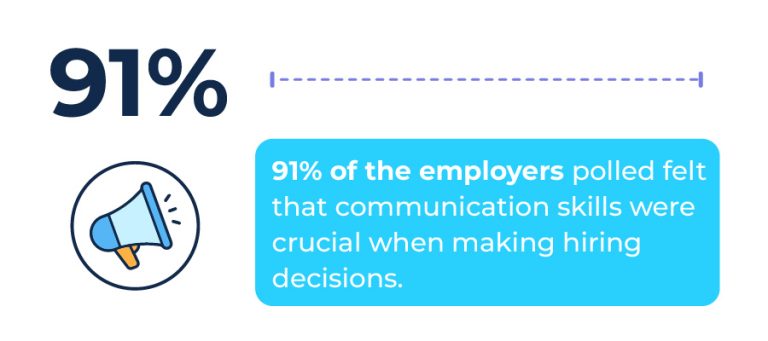
- 91% of the employers feel that communication skills were crucial when making hiring decisions.
- 86% of employers prefer job applicants with great communication skills, and 83% responded that communication skills are a key consideration when hiring new employees.
- 84% of companies use social media for recruiting purposes due to the ability to gauge communication skills.
Benefits of Effective Communication
Effective business communication is about much more than just sending emails and giving presentations. As Jim Rohn once said, “Effective communication is 20% what you know and 80% how you feel about what you know.”
Here’s how strong communication skills can propel your career forward:
Career Advancement:
Strong communication skills make you stand out in interviews, command respect in meetings, and position you as a valuable asset.
Leadership:
As Simon Sinek aptly said, “Great leaders communicate and great communicators lead.”
Negotiation:
Strong communication skills allow you to negotiate effectively, whether it’s securing a better deal for your company or advocating for a raise.
Client Relationships:
Excellent communication skills enable you to understand client needs, present solutions effectively, and foster lasting relationships.
Teamwork:
As Mark Sanborn said, “In teamwork, silence isn’t golden, it’s deadly.” Teams who communicate effectively may increase their productivity by as much as 25%.
How You can Master Effective Communication Skills
There are several ways you can improve your communication skills. They can be divided into two categories – Do it Yourself (DIY) & Done with You (DWY). A few notable methods are mentioned below:
Do it Yourself (DIY)
If you are a self-learner, you can hone your communication skills by utilizing the following:
- Online content (blogs, articles, videos, podcasts, etc.)
- Books
- Self-paced courses
- TED Talks
- Analyzing great speeches (Martin Luther King, etc.)
Done with You (DWY)
On the other hand, if you prefer learning from professionals then you can get professional help through:
- Instructor-led courses (Cohorts with live sessions)
- 1:1 Coaching & Mentoring
- Professional Seminars & Events
- Communication experts
Pakistani Professionals: Challenges & Misconceptions in Communication
Pakistani professionals bring a wealth of talent and dedication to the workplace. However, cultural nuances and educational backgrounds can sometimes pose communication challenges.
Hurdles:
Confidence:
For Pakistani professionals, confidence is a prominent issue when it comes to communicating effectively.
Indirect Communication Style:
Pakistani culture encourages a more indirect communication style, where messages are implied rather than explicitly stated.
Misconceptions:
Focus on Fluency over Clarity:
Pakistanis wrongly perceive fluency as the most important factor of effective communication instead of clarity – of ideas & delivery.
Focus on Content Over Delivery:
Our education system emphasizes rote learning and factual knowledge, with less emphasis on communication skills.
How to Enhance Your Communication Skills in Pakistan
Beyond traditional classroom learning, here are some unique ways Pakistani professionals can hone their communication skills:
- Practice Non-Verbal Communication: Maintain good posture, make eye contact, and project confidence. Modulate your voice for emphasis and avoid nervous ticks.
- Keep it Short & Simple: As the Irish proverb goes, “Say a little and say it well.”
- Learn Communication Frameworks: There are many communication frameworks such as EPIC, STAR, KISS, etc. you can use – depending on your purpose, context, and audience.
- Incorporate Bilingualism: Being proficient in Urdu and English allows you to connect with a wider audience – 2.3 billion people can understand these languages.
- Embrace Cultural Intelligence: Navigate diverse perspectives with empathy and adapt their communication styles accordingly.
More Proven Methods to Improve Communication Skills:
- Leverage Online Resources
- Harness Technology
- Join Professional Organizations
- Seek Mentorship
- Practice Public Speaking
- Join Language Exchange Clubs
- Explore Toastmasters International
- Attend Storytelling Workshops
- Practice Active Listening
- Seek Feedback and Mentorship
- Embrace Storytelling
- Polish Written Communication
- Practice, Practice, Practice
Objectives of Business Communication Course
The main objective of Business Communication course is to equip Pakistani professionals with the essential skills and strategies needed to excel in today’s competitive professional landscape.
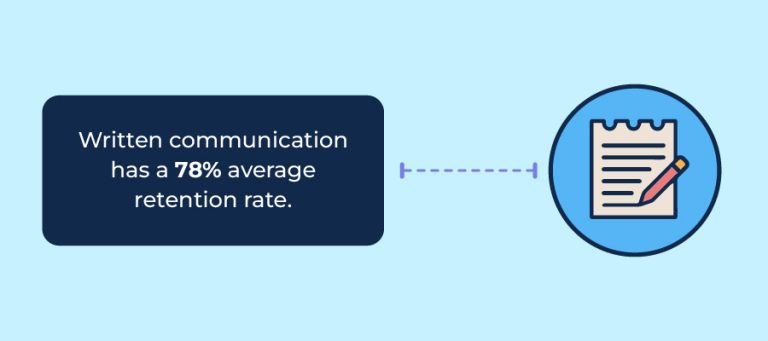
People remember 10% of what they read, 20% of what they hear, 30% of what they see, 50% of what they see and hear, 70% of what they say and write, and 90% of what they do.
That is why enrolling in an interactive Business Communication course allows you to retain most of what you have learned.
Business Communication Online Course
A structured online Business Communication course specifically tailored to Pakistani professionals provides you immense value, such as:
- Expert Guidance
- Contextualized Learning
- Interactive Learning
- Cross-Cultural Communication
- Writing Skills for Business
- Presentation Skills
- Active Listening
- Nonverbal Communication
Summary
Strong communication skills have emerged as a prerequisite for career advancement and success. For Pakistani professionals aspiring to thrive in their careers, investing in enhancing their communication ability is non-negotiable.
A well-designed Business Communication course can provide the roadmap and support you need to navigate this journey with confidence.
Remember, self-improvement is a journey, not a destination.
Invest in Yourself.
Invest in Your Future.
- Course
- 100% Online